-
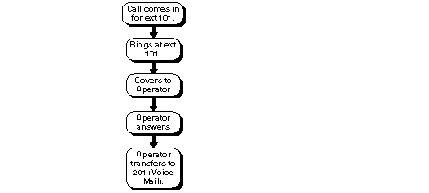
Assign an extension to a coverage group. (In the following figure, the extension is 101.) Assign a Group Cover button to the operator (if a DLC), or assign the coverage group to ring at the QCC.
- Renumber a Calling Group to a number that is easy to associate with
the sender extension. (For example, change 771 to 201. You may have
to renumber an existing 201 first.)
- Assign the Calling Group to overflow to Calling Group 770 (voice mail) with a threshold of 1. (In the following figure, the Calling Group extension is 201.) Assign 101 as the message receiver for Calling Group 770.
With the phantom Calling Groups coverage configuration, a caller dials a DID number (for example, 555-5101). The extension for the DID number (in the example, Extension 101) rings several times. If the telephone is not answered, the call is covered by an operator. The operator answers the call, and the caller asks to leave a message. The operator transfers the call to 201, and the call goes to voice mail. The Message light goes on at the extension for the DID number (in the example, 101).
 |
A user can give out a regular telephone number (555-5101) and a voice mail number (555-5201). This way, callers can leave a message without ringing the telephone. This is necessary to receive messages outside of office hours. Callers cannot leave messages after hours unless they know the second DID number. |